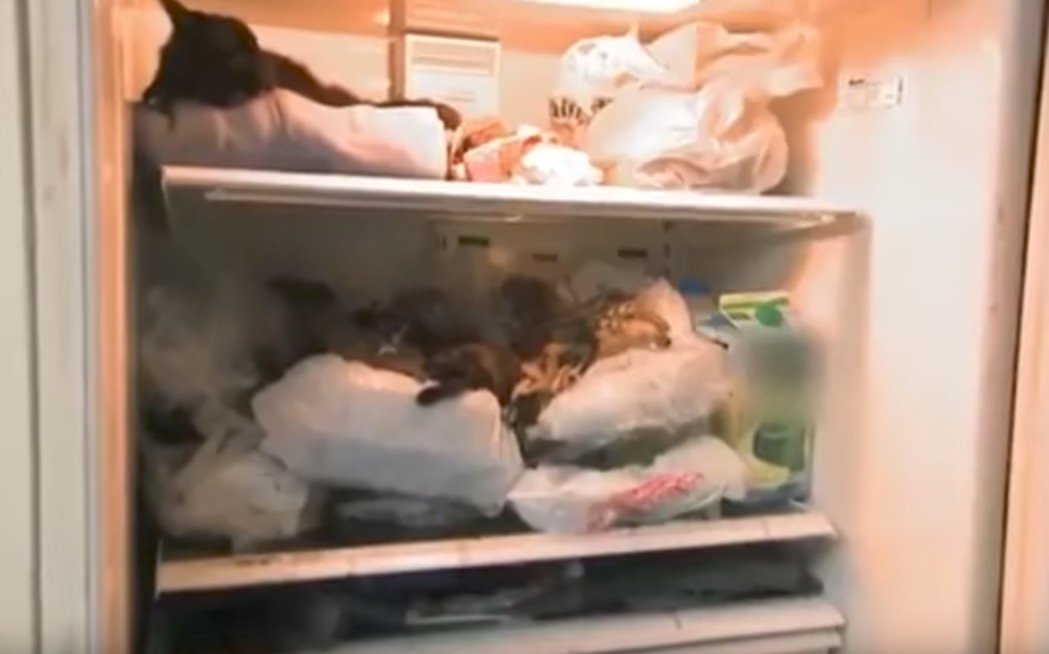

A Southern California insurance fraud scheme that might have sounded too stupid to work did, for a while. Prosecutors say several residents staged fake bear attacks on luxury vehicles, submitted claims for the damage, and backed up those claims with video. The catch, according to investigators, was that the “bear” in the footage was just a person wearing a costume.
Prefer to listen? Play the latest episode of Distorted View Daily below.

Insurance fraud rarely arrives with much charm. It tends to involve staged accidents, inflated repair bills, fake injuries, arson, or the depressing ingenuity of people who have stared at paperwork too long. The California bear suit case stands out because it combined familiar fraud logic with the production values of a bad prank video.
The scheme, investigated under the name Operation Bear Claw, centered on claims tied to an incident in the Lake Arrowhead area. Investigators said one insurer flagged a suspicious report involving a 2010 Rolls-Royce Ghost whose interior had allegedly been damaged by a bear that climbed into the vehicle. The claim came with video. That is where things began to unravel.
Authorities said the footage did not show a real bear at all, but rather a person in a bear costume. The idea, in hindsight, has the desperate elegance of a plan conceived by people who had watched too much low-resolution surveillance footage and decided that fur plus distance equals plausible wildlife. That assumption was not entirely irrational. Plenty of home and driveway cameras are grainy enough to turn ordinary scenes into cryptid evidence. But fraud falls apart the second someone decides to look carefully.
And look carefully they did. A biologist with the California Department of Fish and Wildlife reviewed the footage and concluded the same thing investigators had begun to suspect: that was no bear. The inquiry widened, and officials said they uncovered two additional claims submitted to separate insurers involving the same date and location. Those claims reportedly involved a Mercedes G63 AMG and a Mercedes E350, which was perhaps the first real clue that the wildlife in question had very selective taste.
That detail matters because it reveals the greed at the heart of the operation. If random bear behavior was the cover story, limiting the attacks to luxury vehicles made the pattern look absurdly curated. Real animals are not known for pausing to consider trim packages. Once the claims clustered around expensive cars, the whole narrative started to smell like human thinking dressed up as animal chaos.
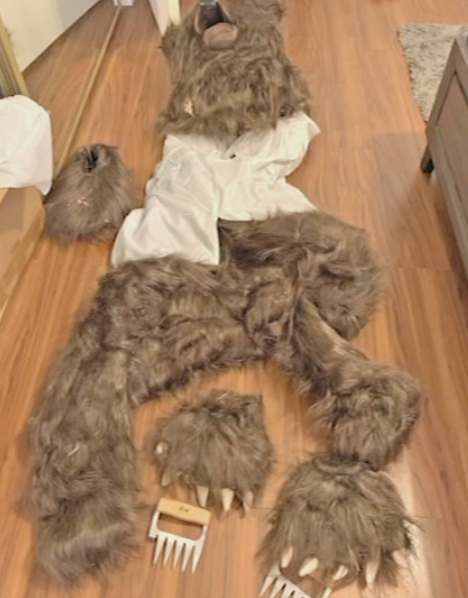
Investigators later served a search warrant and recovered the bear suit from a residence tied to the suspects. By then, the case had become less about suspicion and more about theatrical evidence. There is something uniquely humiliating about a criminal plan that eventually requires police to log a bear costume into evidence. Not every fraud case can manage that kind of visual punchline.
According to state officials, the losses tied to the fraudulent claims totaled $141,839. Several defendants later entered no-contest pleas to felony insurance fraud charges. They were sentenced to weekend jail, probation, and tens of thousands of dollars in restitution. A fourth defendant was still moving through the court process.
The legal outcome is straightforward. The cultural appeal of the story is something else. People are drawn to crimes that reveal too much personality. The bear suit fraud was not just illegal; it was weirdly handcrafted. It involved prop work, location choice, staging, and an apparent confidence that everyone else would be too busy or too dim to ask the obvious question. That kind of arrogance is hard for the public to resist.
It also taps into a longstanding American fondness for animal cover stories. Bears, raccoons, coyotes, deer, and mysterious “wildlife incidents” have all played roles in insurance lore because animals make convenient culprits. They do not testify. They do not leave forwarding addresses. And property damage caused by wildlife often sits in a hazy space where insurers have to untangle not just what happened, but whether the policy covers it. A supposed bear attack offers a useful blend of chaos and plausible deniability, at least until someone in state government ends up watching the tape frame by frame.
There is a small lesson here about fraud in the age of cheap media. A lot of amateur schemes now rely on the assumption that video itself feels persuasive. People trust footage even when the footage is lousy, cropped, or absurd. But video can also invite scrutiny that a verbal claim might have escaped. Once there is a clip to replay, freeze, enhance, and hand to an expert, the lie acquires edges.
That appears to be what happened here. The footage was meant to close the case. Instead, it opened one.
For all its absurdity, the bear suit plan was still expensive enough to matter. More than $140,000 in losses is not comic relief for the insurers involved, and not all fraud needs to be clever to be costly. But it is the costume that will stick in public memory, not the restitution orders. White-collar crime usually leaves behind spreadsheets. This one left behind a mascot.
The case was also discussed on Distorted View Daily, a comedy podcast that has an understandable soft spot for criminals whose plans would have improved dramatically if they had thought like actual bears.
A plan built for blurry cameras
The most revealing part of the case may be the assumption behind it. Prosecutors say the suspects relied on low-quality footage to sell the illusion. That suggests a level of planning, but also a remarkable faith in everyone else’s laziness. They were counting on grain to do the acting.
Luxury cars ruined the premise
If the “bear attacks” had been spread across random vehicles, the claims might have looked less tidy. But once multiple expensive cars were involved, the story began to look curated by someone with a calculator. Criminals often get caught because they overcomplicate a lie. Here, they may have gotten caught because they made the lie too expensive.
😈 Distorted View Take
The show immediately spots the flaw in the animal behavior.
“There was a rash of bear attacks.”
A second later, the pattern becomes the joke.
“Bears, for some reason, were only targeting luxury cars.”
And then comes the advice no real wildlife would ever need.
“They could have picked a couple shitty vehicles too, Like a VW Bug or something.”
Related Reading
- What Does “Death Fat” Mean? Body Positivity Term Explained
- AI Jesus Chatbots Are Charging Users Per Minute
- What Happened When Google Banned a Family After Gemini Live
🎧 Hear More from Distorted View Daily
This story was featured on Distorted View Daily, a comedy podcast covering bizarre news, internet insanity, and strange real-world events.
Listen and subscribe: